20 Top Ideas For Choosing Anti-Termite Control Services In Jakarta
Wiki Article
Javanese Wooden: Preserving Heritage Structures
Every heritage structure in Jakarta is a story in two parts. The first is inscribed in carved teak and colonial-era joinery--craftsmanship that has survived earthquakes, regime changes, and a century of tropical rainfall. The second tale is told through mud-tubes frass or the hollow echo caused by a timber that was reduced to veneer due to termites. Javanese wooden structures of the past are not preserved as a museum, but rather through an intervention by forensics. The materials are not as resistant to decay than they were portrayed to be. The authentically-made replacement wood might be most appealing to subterranean-termites. To ensure termite protection, the heritage contracts should include identification of species, proof of heartwood, and preservation methods that protect the colonial construction stories that are interspersed throughout the grain.
1. Teak that is sold today doesn't include the Heritage Teak.
Javanese teak older than 60 years and is gathered contains extractive oils and silica deposits which prevent termites from eating. Teak from plantation that is harvested between 15 and 20 years has no trace of both. The structures that are failing in the past frequently not failing because the original wood has decayed, they're failing because the 20th century repairs used immature teak that termites recognize as food. Prior to installing new timber, exterminators must examine it for resistance.
2. Heartwood vs Sapwood: The Invisible Durability Gap
Two durability classes can be found in one wood. Mahoni heartwood is resistant against termites. mahoni sapwood is very vulnerable. Nangka heartwood is Class II; nangka sapwood is Class V--the lowest possible rating. Heritage restoration contractors who use specific wood species and don't specify only heartwood construction are putting termite prone wood into buildings that survived on the old growth resistance for decades. Anti-termite companies must request cores prior to approving any timber for restoration.
3. Bamboo Preservation is a reality, but it Requires Immersion
Bamboo that is not treated, and not bamboo in itself is the culprit. Tobacco stem wood vinegar applied through an overnight soaking cold and soil drenching in the zone around the base decreases termite infestation by more than 30% after 18 months. Bamboo structures with historical significance can be preserved but only by surface brushing. In addition, a system for immersion is required.
4. Javanese wood isn't utilized for Colonial-Era repairs
Between 1911 and 1942, Dutch plague officers forcibly rebuilt 1.6 million Javanese houses, and imposed timber replacements based upon epidemiological criteria but not continuity in culture. A large portion of what is believed to be original Javanese vernacular architecture is actually colonial-era public health infrastructure. Anti-termite inspections of historic buildings must differentiate between colonial joining from Dutch-mandated substitute materials. Thinking of them as the same thing misinforms conservation concepts and risks assessment.
5. Soursop Leaf Extract Works at 25% Concentration
The termite-mediated loss of weight can be reduced to less than 5 percent through cold-soaking durian and coconut timbers in a solution comprising 25% soursop extract. This is an commercially acceptable classification for resistance. This is not folk medicine; it is concentration-dependent, replicable, and requires no synthetic chemistry. Jakarta exterminators who treat clients with a heritage must partner with facilities that can offer immersion treatments and certify extract concentration in treatment documentation.
6. SNI Class II Is Not "Termite Proof"
Although Indonesian National Standard Class II wood is categorized as "resistant", it still suffers a six-to-ten-percent weight loss when compared to Coptotermes curvevignathus. Heritage preservation contracts that stipulate "Class II or better" without additional intervention are accepting an amount of consumption that is quantifiable. For irreplaceable components, physical barriers and non-repellent enticements must be added to the wood.
7. Agathis Timbers and Durian Timbers: Heritage Liabilities
In the colonial period of Javanese furniture and interior joinery, Agathis dammara is widely employed. Central Java heritage buildings are usually constructed of Durio zebethinus timber. Both species receive the Class V rating, which is extremely low resistance to chemicals and other chemicals. The species should be identified immediately by exterminators that inspect the heritage properties. A carved-out Agathis doorframe is not an asset for conservation, it is a termite feeder station in historical dress.
8. Moisture Content Determines Detectability
Whatever the nature or the degree of durability, termites are unable to detect wood with a moisture level lower than 12-15 percent. Heritage structures often leak and the foundations for heritage buildings typically lack damp-proofing. The anti-termite treatment treats historic timber without addressing drainage issues on the roof or downspout and the capillary water that is leaking from masonry is putting on costly preservatives to wood that termites are already mapping through the smell.
9. The 1911 Archive Exists and Is Searchable
University of Cambridge archives and Dutch colonial collections include around 300 images of Javanese building construction between 1911 and 1930. They showcase the old materials, historical interventions in repair as well as specific joinery techniques. These are forensic documents not merely academic curiosity. Heritage exterminators who consult archives of photographs can discern authentic fabric from later replacements and make adjustments to risks assessments.
10. Preservation through Treatment Not Replacement
The Dutch colonial case illustrates how material substitution at a continental level can produce buildings of doubtful authenticity as well as termite resistance. Preservation of heritage is not enhanced through cutting the wood and then introducing plantation wood. The only way to make it economically and ethically viable is treating the wood using natural extracts. Targeted baiting can be applied to textiles that are irreplaceable. Retrofits of physical barriers are also feasible without digging up foundations. Anti-termite contractors who present themselves as preservation partners, not as replacement contractors are more likely be specified by architects. They also earn the trust from homeowners.
The article's conclusion is:
Javanese wood preservation is not an exclusive specialty; it is the original termite control method, which was practiced for centuries before synthetic pesticides became available. The extract of soursop at a rate of 25 percent threshold, the 18-month bamboo vinegar protocol, as well as the heartwood verification requirement are not alternatives to professional extermination. They are professional procedures executed at heritage standard. Jakarta anti-termite companies that are interested in heritage contracts should invest in infrastructure for immersion, acquire core sampling tools and train inspectors to discern colonial-era plague homes from pre-colonial vernacular construction. The wood is not replaceable. The wisdom of how to protect the wood is not lost. It's just that it hasn't been implemented. Homeowners and conservators are willing to spend more money for services that have this ability. There is a market. It's a matter of which exterminators choose to service it. Follow the top rated jasa pembasmi rayap for website advice including kitchen set anti rayap, rayap adalah, rayap adalah, cara membasmi rayap kayu, jasa anti rayap, jasa pembasmi hama, membasmi rayap, jasa rayap, kayu tahan rayap, jasa pembasmi rayap and more.
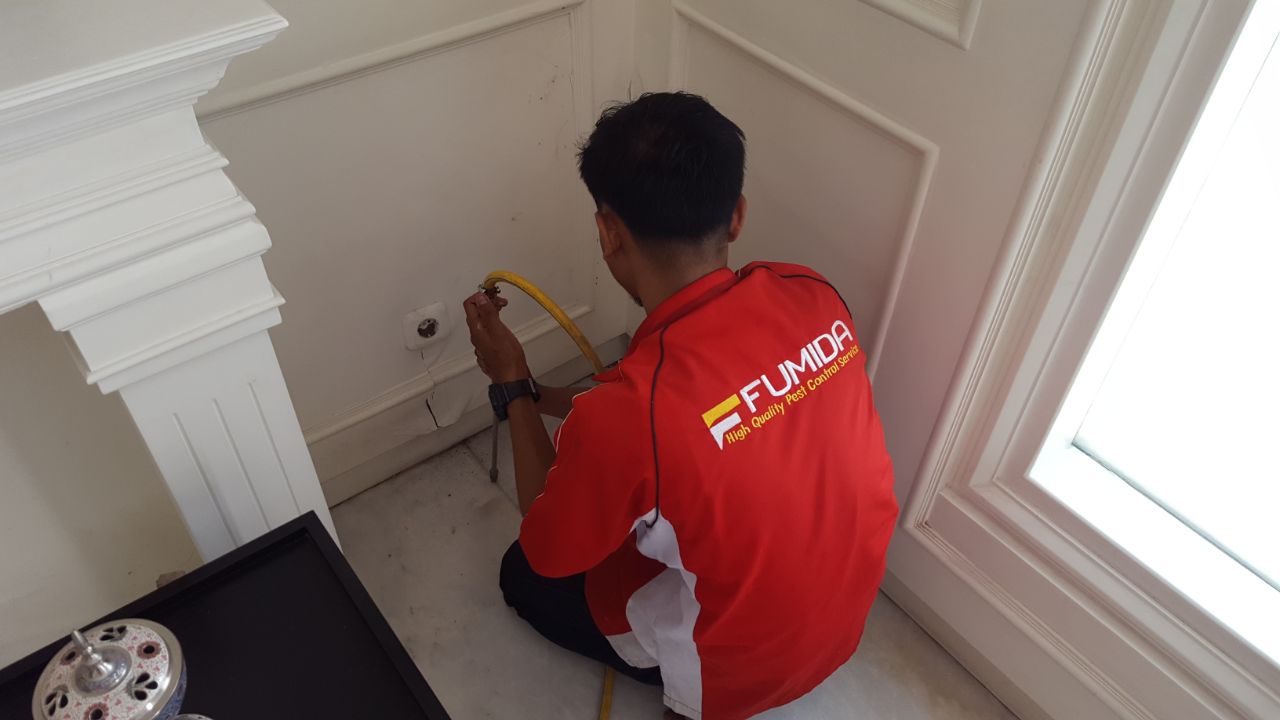
Above-Ground Baiting For Asian Subterraneans In Jakarta
Jakarta homeowners believe that termite poisoning involves digging bait stations made of plastic in the garden. A technician inspects them at least every few months, and then looks at them the area, then shrugs and goes to the next. This is a form of perimeter surveillance, not colony removal. Baiting above ground is a totally different discipline. The station isn't buried. Instead, it is attached or pressurized to active mud tubes. The termites aren't required to locate the bait. It is positioned on their commuter highway. For Asian subterranean species--Coptotermes gestroi, Coptotermes curvignathus, Microtermes insperatus--above-ground delivery bypasses every behavioral barrier that makes perimeter baiting slow and uncertain. Jakarta anti-termite service vehicles which don't have above-ground stations are equipped to check, not treat.
1. Active Infestation is required for Above-Ground Stations
Termites do not know about the bait stations until they locate them. Above-ground baiting is based on confirmation. The station will not be activated until mud tubes are discovered or timber that is damaged. It is not a problem however it's effectiveness. There is no plastic buried beneath sterile soil. The technician doesn't have to supervise stations that do not receive a hit.
2. The Mud Tube as a Delivery Infrastructure
Stations above ground can integrate into existing structures for termites. The base of the station forms an enclosed chamber over the mud tube. Termites traveling between nests and feeding site traverse the station. They encounter the bait matrix, and eat the bait before continuing their journey. The tube has not been damaged. The commuting pattern does not change. The colony poisons its own infrastructure.
3. Testing for Palatability is different for Above-Ground Delivery
The colony already has a taste test for wood. The feeding site is confirmed. The bait matrices above the ground need only to be acceptable. The formulation is flexible and can include toxicants that are slower acting and would be deemed undesirable due to the fact that they compete with the adjacent untreated wooden surfaces. Jakarta exterminators can carry multiple bait formulations. Select based off of the observed preferences for feeding.
4. Recruitment Multiplier through Self-Seeding
The feeding process begins when termites live are transported from infested wood into the station's room above ground. The introduced termites have already adjusted to the local environment and the foraging pattern. They start eating bait and attracting nestmates through trophallaxis. This easy action boosts the delivery of toxicants by approximately 30%. Exterminators that kill termites when they scrape wood damaged waste biological resources.
5. Coptotermes gestroi reacts quickly to Above-Ground Placing
Asian subterranean termites especially Coptotermes gestroi, maintain high foraging tempo year-round. Above-ground stations that are installed on infestations that are active typically report eating in just 48 hours, and an observable consumption of bait within one week. Colony-eradication timelines are decreased from a long time to just a few weeks. The companies that offer an above ground baiting use suboptimal matrices and/or fail to transfer the recruiting termites.
6. Microterms and Macrotermes Need to be placed differently
The termites that cause fungus (Microtermes Macrotermes, Microtermes, and Macrotermes gilvus) don't build the mud tubes as frequently as Coptotermes. Their feeding spots are generally hidden in the wood. Above-ground baiting is necessary to fight the species. This involves the excavation of damaged areas and their inserting them into the feeder chamber of the matrix and a careful resealing. The design of the station is different. Jakarta exterminators who attempt Coptotermes protocols against Microtermes infestations might observe a low uptake.
7. Moisture Conditioning Is Non-Negotiable
Above-ground bait matrices are manufactured with specific levels of water activity. Jakarta's humid environment causes moisture to be exchanged with surroundings. Bait stored in the toolbox of your vehicle for a couple of weeks is dehydrated; bait left out in the open, not protected from atmospheric moisture and without its packaging, can spoil. Exterminators are required to condition the bait cartridges prior installation. This involves adding a measured water, in order to achieve the ideal moisture level. Unused inventory should be shielded from Jakarta's 24/7 humid climate.
8. Inspection Frequency Presses
Inspecting cycles for the program of perimeter baiting are scheduled for quarterly or bi-annually. Aboveground baiting follows a weekly program. The active infestations consume bait very quickly; depleted cartridges must be replaced within days and not weeks. Colony elimination is confirmed after feeding ceases, and the mud tube desiccates. Companies that schedule above-ground bait checks on their standard perimeter monitoring timeline will observe bait depletion, assume treatment is in progress, and miss the colony recovery window.
9. Warranty Coverage Requires Different Underwriting
Perimeter Baiting warranties are priced based on station density and frequency of inspection. The cost of an above-ground baiting warranty is determined by the species, the extent of infestation, and complexity. A single Coptotermes enterosus colony passing through the threshold of a door can be covered at the standard rate. Microtermes infestations that spread across an entire floor require a different model of risk. Jakarta antitermite services who offer the same cost for both scenarios are misestimating the risk.
10. Above-Ground is diagnostic and not just therapeutic.
The rate of bait consumption, the caste ratio of termites found in stations and the place of the mud tube's attachment provide an in-depth analysis of colony health and the range of foraging. Rapid consumption indicates large and resource-stressed colonies. Consumption that is followed by abandonment suggests possible colony elimination or possible bait avoidance. The mud tubes will darken if there is less activity. Exterminators who are trained to detect these signals can alter treatment parameters in real time. The most effective termite control is not being utilized by exterminators who simply swap cartridges.
Conclusion
Baiting for Asian Subterraneans above ground is not a service that is offered by inspection firms. This is the thing that differentiates them from colony-eradication experts. Perimeter baiting monitors. Baiting treats above the ground. Perimeter-baiting awaits discovery. Above-ground baiting experts face difficulties. Perimeter baiting generates quarterly service orders. Above-ground colony elimination is accomplished through above-ground baiting. This leads to warranty renewals and the complete elimination of colonies. Jakarta anti termite services that hinder the adoption of above-ground protocols usually cite the cost of equipment and training needs. These are not barriers; they are investment opportunities. The expense of equipment is recovered within the first three above-ground deployments. The cost of training will pay for itself when technicians become experts in diagnosing and not generalists. Multiple bait matrices distinguish high-end exterminators from the ones that are common. Homeowners who have active termite infestations are not interested in monitoring their perimeters. They do not want perimeter monitoring. Above-ground baiting can bring you there in the shortest time. Jakarta exterminators scrape tubes or inject soil into the ground, but they don't set up above-ground baiting stations. The colony continues to eat every day that the exterminator is working. Have a look at the most popular anti rayap for more tips including rayap rumah, jasa anti rayap bandung, pintu anti rayap, jasa basmi rayap, rayap rumah, jasa pembasmi rayap, anti rayap kayu, kayu anti rayap, jasa pengendalian hama, jasa anti rayap jakarta and more.
